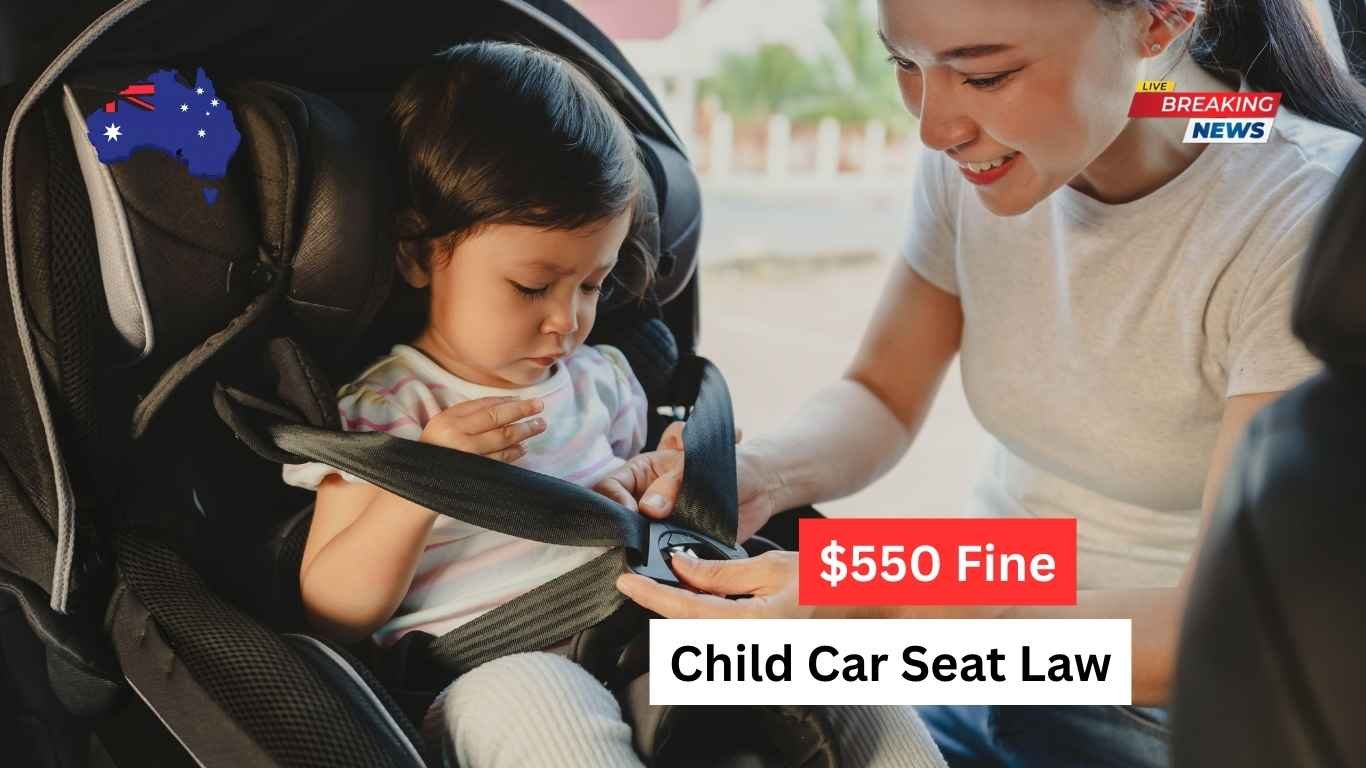
From 29 November 2025, Australian parents and caregivers will face stricter penalties for unsafe or incorrectly installed child car seats. Under the new national road safety reform, drivers can be fined up to $550 if restraints are not fitted according to current Australian Standard AS/NZS 1754 or if a child is placed in an unsuitable seat for their size or age. The law aims to reduce preventable injuries and deaths caused by improper use of restraints in vehicles.
Why the Law Is Changing
Recent national road safety reviews revealed that more than 60% of child car seats checked at random were either installed incorrectly or being used in the wrong configuration. Authorities identified this issue as a major contributor to child injuries during car crashes.
The updated legislation responds to these findings by standardising enforcement across all states and territories. The objective is not only to penalise unsafe use but also to raise awareness about correct child restraint practices and ensure compliance with modern safety technology.
Key Requirements Under the New Law
The updated child seat law mandates that all restraints must:
- Meet Australian/New Zealand Standard AS/NZS 1754 for design and safety.
- Be professionally or correctly installed with top-tether anchorage points.
- Match the child’s height, weight, and age requirements.
- Be securely tightened to prevent excessive movement during braking or impact.
- Include a booster seat or seatbelt adjuster when required for older children.
Parents and drivers are responsible for ensuring both the installation and the way a child is placed in the restraint are compliant before driving. Officers conducting roadside checks will visually inspect seats for correct use, and random inspection campaigns are planned in schools and shopping centres.
Age and Size-Based Restraint Rules
The law clarifies the appropriate restraint type for each age and size category:
- Under 6 months: Rear-facing child restraint only.
- 6 months to 4 years: Rear- or forward-facing seat with an inbuilt harness.
- 4 to 7 years: Forward-facing seat or booster seat with a properly adjusted seatbelt or harness.
- Over 7 years: Booster seat or adult seatbelt (must fit across the shoulder and chest without slack).
Authorities encourage parents to follow child height markers instead of only relying on age, as children develop at different rates.
New Enforcement and Fine Structure
From 29 November 2025, police and transport authorities nationwide will have unified powers to issue on-the-spot fines for non-compliant or unsafe installations. The $550 fine applies when:
- A child car seat fails to meet approved safety standards.
- The seat is not securely anchored or attached.
- The restraint does not match the child’s size.
- A child travels in a seat position without proper restraint equipment.
Some jurisdictions may also add demerit points alongside the fine, depending on the severity of the breach.
Common Installation Mistakes to Avoid
The law highlights frequent errors that can lead to fines or unsafe conditions, such as:
- Using second-hand seats that don’t meet current safety standards.
- Failing to anchor the top tether strap correctly.
- Loosely fitted harnesses or incorrectly routed seatbelts.
- Placing the seat in a front passenger position with an active airbag.
- Transitioning a child to a booster too early.
Authorities recommend parents visit authorised fitting stations or community safety checks, which operate through motoring clubs and local councils.
Nationwide Awareness and Support Campaign
To accompany the law, a federal safety campaign will launch under the theme “Fit Right, Drive Safe,” promoting awareness through schools, childcare centres, and parenting networks. The campaign will include free car seat safety checks and online tutorials about correct restraint installation.
Transport Australia officials state that technology and awareness must work together, with modern seats offering better side-impact protection and load-limiting harnesses — but only when installed properly.
What Parents Should Do Before 29 November
To prepare for the law’s enforcement, parents and guardians should:
- Check the seat’s compliance label for the AS/NZS 1754 code.
- Reinstall or professionally verify anchorage points and harness tension.
- Review manufacturer instructions for maximum height and weight limits.
- Replace outdated or expired seats, as plastics and materials degrade over time.
- Ensure backup childcare drivers (relatives or babysitters) understand proper use.
Ensuring full compliance before the law’s effective date will not only prevent fines but also protect children in the event of an accident.
The Bigger Picture: Road Safety Priorities
The new child car seat regulation is part of Australia’s 2025–2030 National Road Safety Strategy. It complements other safety initiatives such as AI-controlled red-light cameras and enhanced pedestrian protection zones. Collectively, these measures target key causes of road trauma, aiming to cut serious injuries and fatalities by 50% over the next five years.
By updating restraint standards and improving compliance enforcement, authorities are signalling a stronger focus on protecting the youngest and most vulnerable passengers on Australian roads.
Frequently Asked Questions
1. When does the new child car seat law start?
The law takes effect across Australia on 29 November 2025.
2. What is the fine for incorrect child seat installation?
Drivers face a $550 fine, and in some states, extra demerit points may apply.
3. Are all existing car seats still legal?
Only those that meet Australian Standard AS/NZS 1754 remain approved for use.
4. Can I install a child seat myself?
Yes, if you follow exact manufacturer instructions, but professional fitting is strongly recommended.
5. What if my child is small but over 7 years old?
If the adult seatbelt does not fit correctly, the child should remain in a booster seat for safety.